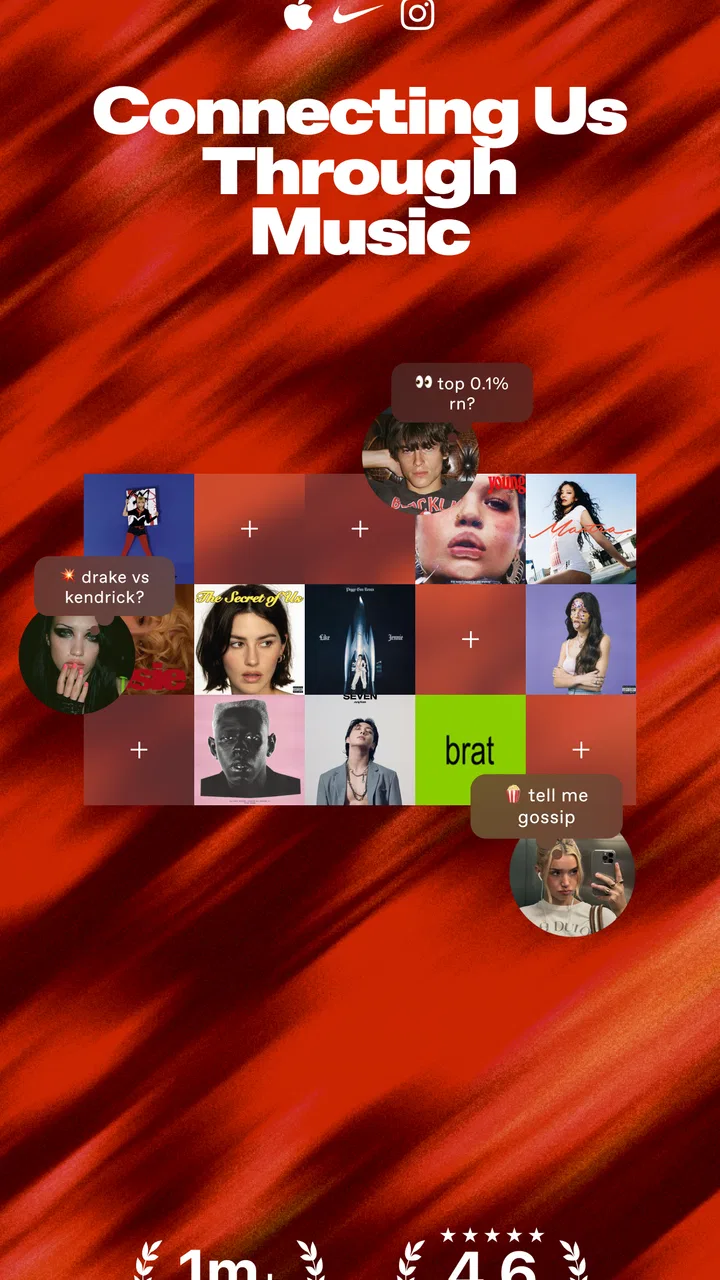
EQUALS - Music Social Network
- 4.0
- Rating
- 500.00K
- Installs
- Free
- Price

 Analysis by App-foxy
I tried EQUALS as a music-focused social app rather than as another streaming service, and that distinction matters from the first few minutes. Its purpose is to connect music discovery with conversation, opinions, and meeting people who enjoy similar sounds. The idea is appealing for anyone who finds new artists through discussion instead of relying only on recommendation playlists. It is also interesting in a household where more than one person uses the same phone or tablet, because the app feels personal: each person’s conversations, reactions, and new connections should be treated as belonging to that individual account.
That personal angle is the main thing I would explain to a friend before recommending it. EQUALS is not a shared music library, a family listening room, or a replacement for a conventional audio player. It is a social layer around music, built for hot opinions, chats, and discovering people. The developer is Equals Collective Limited, and the app sits in the Music & Audio category. It is free to install, although optional purchases range from $3.49 to $46.99 per item. The balance between open conversation and personal boundaries is therefore more important here than it would be in a simple playlist app.
How EQUALS feels in a real shared-device situation
Imagine a household with one tablet in the kitchen. One person wants to browse music conversations while preparing dinner, another wants to check what friends are discussing, and a teenager wants to use the same device later. In that situation, EQUALS can be enjoyable, but only if everyone treats it as a personal social account rather than a communal app. I would not casually leave one person logged in and hand over the device, because social activity is more private than a shared playlist.
You May Also Like

 Blood Strike: 2.5 Anniversary
Blood Strike’s Loadouts Turn Every Drop Into a Tactical Gamble
A close look at Blood Strike’s custom loadouts: how fast access to signature weapons reshapes its battle royale rhythm, rewards preparation, and narrows the gap between fights.

 Pandora - Music & Podcasts
Pandora’s Music Is Easy to Start, but Harder to Recover
Pandora’s strength is its low-effort path from a seed to a station. Its weak spot is how much confidence it asks you to place in connection, setup, and quiet recovery.

 8 Ball Pool
 Is Built on Rivalries, Rematches, and Routine
A close look at the rivalries, rematches, shared routines, and unanswered safety questions that turn a quick pool match into a persistent mobile community.

 Samsung Music
’s Quiet Strength Is Playing What You Already Own
Its reach comes less from spectacle than from dependable access to a personal library. That simplicity is both the app’s strongest retention engine and its ceiling.

 AccuWeather: Weather Radar
AccuWeather Review: A Quick, Clear Forecast for Everyday Decisions
For everyday plans, the best forecast is the one you can understand quickly. AccuWeather makes rain timing, radar, and local conditions easy to act on, with a few trade-offs.

 Hill Climb Racing
Why Hill Climb Racing Still Turns Crashes Into One More Run
A tiny car, a bumpy hill and one more upgrade: Hill Climb Racing keeps resurfacing because its simple chaos makes every near-miss feel personal.
More From Our News Desk
View All News


The useful scenario is not that several people can magically combine their profiles. Instead, the app can become a conversation starter when each household member keeps their own identity and then discusses discoveries offline. One person might find an unfamiliar artist through a chat, another might challenge the opinion, and the household can listen together using its usual music service. That makes EQUALS a companion to streaming, not a substitute for it.
In my experience, the strongest use case is a music fan who enjoys explaining why a song works, defending an unpopular opinion, or asking other listeners for recommendations. Someone who only wants uninterrupted playback will probably feel that the social side gets in the way. The app earns its place when music is something you talk about, not merely something you leave playing in the background.
There is also a practical trade-off with shared devices. A normal audio app may be harmless to leave open because the next person can simply choose another album. A social network can expose the previous user’s profile, messages, or activity if the account is not changed properly. I would make switching accounts part of the household routine, just as people do with email or messaging apps. That small habit prevents awkward mix-ups and keeps each person’s conversations separate.
What the social format adds to music discovery
Traditional streaming apps are excellent at passive discovery. They can build playlists around listening history, mood, or genre, but they rarely explain the human reason behind a recommendation. EQUALS approaches discovery through people and discussion. A recommendation may be more memorable when it comes with a strong opinion, a debate, or a short exchange with another listener.
That can make the discovery process feel less predictable. Instead of accepting whatever an algorithm places next, I can look for a viewpoint that matches my taste or deliberately follow an argument from someone who listens differently. The benefit is variety. The cost is that social recommendations are not always neatly organized, and the quality of the experience depends on whether the conversations feel useful rather than repetitive.
I would use the app when I have a few minutes to browse and want to leave with something new to investigate later. I would not open it expecting the same polished, hands-off flow as a dedicated streaming platform. Its value comes from participation. The more willing I am to read, react, and talk, the more likely I am to find the app rewarding.
Setting up personal boundaries before sharing the device
Because EQUALS is social, setup should begin with account ownership rather than music preferences. On a household tablet, I would decide who is using the account before opening conversations. If several people want to try it, each should understand that their profile represents them, not the whole family. That is especially important when a parent and teenager use the same device, since a casual handoff can blur who is speaking to whom.
The app carries a Teen content rating, so I would treat it as a service for older children and adults who are ready to manage social interaction responsibly. That label is useful context, but it is not a reason to assume that every conversation will suit every member of a household. A parent should still talk with a younger user about sharing personal details, responding to strangers, and recognizing when a music debate has become uncomfortable.
I would also separate the idea of music taste from identity. A profile built around favorite artists can reveal more about a person than expected, especially when combined with public opinions and conversations. For a shared-device setup, the safest approach is simple: use the correct account, avoid posting details that identify the household, and review what is being shared before joining a new conversation.
Another boundary concerns purchases. EQUALS is free to use in its basic form, but it includes optional in-app purchases. On a device used by several people, I would make sure everyone knows that “free” does not mean every item or enhancement is automatically included. The listed purchase range begins at $3.49 and reaches $46.99 per item, so I would not let a child or guest assume that tapping a purchase option is harmless.
This is one area where EQUALS differs from a shared music player. In a streaming app, the main concern is usually whose playlist gets changed. In a social app with optional purchases, the concern includes account identity and spending responsibility. I would keep the payment decision with the account owner and explain that clearly before handing over the device.
A practical routine for multiple people
My preferred routine would be to use one person’s account at a time, finish the conversation, and then deliberately move to the next account rather than simply passing the tablet across the room. If the household only has one account, I would not treat that as a group profile. It is better understood as one person’s social presence being temporarily used by everyone, which can quickly create confusing recommendations and replies.
For a family music night, I would use EQUALS before or after listening, not during the shared session. Before playing music, each person can browse for an idea or debate a recommendation. During listening, the household can focus on the songs without mixing several people’s social activity. Afterward, the person whose account is open can decide whether to continue the conversation or leave it for later.
This workflow sounds cautious, but it solves a real problem: music taste is often shared casually, while social identity is not. Keeping those two things separate makes the app more comfortable for everyone. It also prevents one person from accidentally posting a reaction that another family member intended only as a private thought.
Using EQUALS to coordinate music conversations
The app works best when I approach it with a small purpose. Instead of endlessly scrolling, I might look for a fresh recommendation, ask for opinions on a genre, or compare two contrasting takes. That makes the social design more useful than simply opening the app whenever I am bored. A focused question gives conversations somewhere to go.
For friends who share music regularly, EQUALS can sit between a group chat and a streaming service. A group chat is convenient, but music links can disappear under unrelated messages. A streaming app keeps the audio organized, but it may not provide the same room for disagreement. EQUALS has the potential to make the discussion itself the center of the experience.
The trade-off is that conversation requires more attention than a playlist. If I am commuting or working, I may prefer a familiar player that starts instantly and stays out of the way. If I am in the mood to discover something through other people’s reactions, the social format makes more sense. I would judge it by the kind of listening I want that day rather than expecting it to replace every other music tool.
A useful household arrangement would be to let one person act as the conversation starter without making them the household spokesperson. For example, a parent could find an interesting discussion and mention it at dinner, while each teenager decides independently whether to explore it. That keeps coordination informal and avoids turning the account into a shared bulletin board.
I also think the app benefits from deliberate pacing. Social music discovery can become noisy when every opinion is treated as urgent. I would save the most interesting recommendations for a later listening session, then return with a more useful response after hearing the track. That creates a better bridge between online discussion and actual listening than reacting immediately to everything.
Where it beats familiar alternatives, and where it does not
Compared with a standard streaming app, EQUALS is stronger when the goal is human context. A playlist can tell me what to hear next; a conversation can tell me why someone thinks I should hear it. Compared with a general messaging app, EQUALS is more focused because music is the shared subject. Compared with a private group chat, however, it may feel less controlled if I only want to talk with people I already know.
That last point is important. If my priority is a closed circle of friends, a familiar messaging service may be the better choice because everyone already understands the group boundary. If my priority is meeting listeners beyond my existing circle, EQUALS is more appealing. The app’s central promise is discovery through social exchange, so people who dislike interacting with unfamiliar users may not get much from it.
I would also choose a conventional music service when I need dependable playback, carefully managed libraries, downloads, or a straightforward queue. EQUALS should not be judged unfairly for lacking the focus of a dedicated player, but I would not install it as my only music app. Its role is more conversational and exploratory.
Age, trust, and the tone of participation
The Teen rating gives families a useful starting point, but trust still has to be built through conversation. I would explain to a younger user that a shared interest in music does not automatically make another participant a trusted friend. Recommendations and opinions are fine topics; personal addresses, school details, routines, and private family information are not necessary for enjoying the app.
For adults, the same principle applies in a different way. A strong opinion can attract replies, and a friendly music discussion can become more personal than expected. I would keep the first interactions centered on artists, albums, genres, and listening habits. That makes it easier to decide whether another participant is respectful before sharing anything beyond music.
Households should also agree on what happens when a conversation becomes unpleasant. The simplest rule is not to argue indefinitely. If a discussion stops being enjoyable, leave it alone and return to music elsewhere. EQUALS is most useful when disagreement adds perspective; it loses its appeal when every exchange becomes a competition to win.
The app’s current version is 0.1.239, which gives me the impression that I should expect an evolving experience rather than a completely settled one. I would keep expectations realistic and pay attention to how the app fits my habits over time. Early versions of social products can feel exciting because the community is still taking shape, but they can also have rough edges in navigation or conversation flow.
That does not make it a poor choice. It simply means I would recommend trying it with a clear purpose instead of building a household routine around it immediately. Give it a short trial, see whether the discussions lead to worthwhile discoveries, and decide whether the social layer earns regular attention.
Who should install it, and who should skip it
I would recommend EQUALS to music fans who enjoy sharing opinions, discovering artists through people, and taking part in conversations rather than silently consuming playlists. It is particularly suitable for someone who feels that algorithmic recommendations have become predictable and wants a more personal route to new listening ideas.
I would also recommend it to friends who often send each other music but want a space where those discussions do not get buried among unrelated messages. The app can give music talk its own identity, provided everyone is comfortable with a social environment and understands how personal accounts should be handled.
I would skip it if I want a simple player with no social distraction, if I only listen to music offline, or if I am looking for a tightly controlled private group. I would also hesitate to install it on a shared family device without agreeing on account switching and purchase boundaries first. Those are not reasons to reject the app entirely, but they are signs that another tool may fit the household better.
For a younger teenager, I would treat installation as a conversation rather than an automatic yes or no. The Teen rating makes the age context clear, while the social design makes maturity and judgment relevant. A child who understands privacy and respectful interaction may use it sensibly; a child who tends to share too much or respond impulsively may need a more private music option.
My household verdict
EQUALS is an appealing experiment in making music discovery more social. I like that it aims to turn listening into a conversation, because recommendations often become more meaningful when they come from a real person with a clear point of view. The free entry point makes it easy to test, and its average rating of 4.0 from around 5.2K ratings suggests that many users find the concept worthwhile, even if it will not suit every listening style.
The app has also passed the half-million-install mark, so it is more than an obscure experiment. Still, I would focus less on the size of the audience and more on whether the conversations feel relevant to my taste. A large social space is only useful when I can find discussions that are enjoyable, thoughtful, or genuinely helpful.
My final recommendation is positive, with clear boundaries. Use EQUALS as a social companion for music, not as the household’s shared player. Keep accounts separate, treat the Teen rating as a prompt for responsible use, and make purchase expectations explicit on shared devices. If you want human opinions and new connections around music, I think it is worth trying. If you want quiet playback, private family coordination, or a perfectly organized library, I would choose a conventional music app instead.
FAQs for EQUALS - Music Social Network
01What is EQUALS - Music Social Network?
EQUALS - Music Social Network is an app designed for people who want to discover music and connect with other listeners. It combines social interaction with music-focused content, allowing users to share opinions, discuss artists or songs, and explore recommendations from the community. It is best suited to users who enjoy finding new music through conversations and personal suggestions rather than relying only on automated playlists.
02How does EQUALS help users discover new music?
EQUALS encourages music discovery through community activity, shared posts, recommendations, and conversations about songs and artists. Instead of experiencing music in isolation, users can see what other members are listening to and exchange opinions about different releases. The quality of recommendations may depend on how active the community is in your region and on how much information you add to your profile and interactions.
03Can I listen to full songs directly inside EQUALS?
The app’s primary purpose is social music discovery, so listening features may depend on the content available within the platform and any integration with external music services. Before downloading, users should check the current app description and permissions to confirm whether full tracks can be streamed in the app or whether EQUALS redirects users to another music platform. Availability can also vary by country, licensing agreements, and device.
04Is EQUALS free to download and use?
EQUALS may be available as a free download, but users should review the store listing for possible in-app purchases, subscriptions, advertising, or optional premium features. Social networking functions are often accessible without payment, while enhanced discovery tools or additional customization may require a paid plan. Always check the pricing details shown for your country before confirming a subscription, particularly if a trial period is offered.
05Is EQUALS safe and suitable for all users?
Because EQUALS is a social network, users should expect to interact with content and comments created by other people. Review the app’s privacy policy, account settings, reporting tools, and age rating before creating a profile. Avoid sharing sensitive personal information, use a strong password, and adjust notification or visibility settings if necessary. Parents should also check whether the platform’s community features are appropriate for younger users.
Pros
- Discover independent artists and fresh music through a social feed.
- Lets listeners connect directly with musicians and other music fans.
- Useful for sharing songs
- opinions
- and personal music recommendations.
- Community-focused design encourages interaction beyond passive streaming.
- Can help emerging artists gain visibility without traditional promotion.
Cons
- The catalog may feel limited compared with major streaming platforms.
- Some features depend heavily on having an active community nearby.
- Music discovery can be inconsistent outside popular genres and trends.
- Social interactions may require creating an account and maintaining a profile.
- Artist activity and content quality can vary considerably across the platform.

EQUALS - Music Social Network
Gallery